Yulin Li
Robotics · Contact-Rich Motion Planning · Mobile Manipulation

I received my Ph.D. degree in Robotics and Autonomous Systems from the Hong Kong University of Science and Technology (HKUST), where I was jointly supervised by Prof. Jun Ma and Prof. Michael Yu Wang. Prior to my doctoral studies, I earned the M.Sc. degree in Mechanical and Aerospace Engineering from the University of California, San Diego (UCSD) with a major in robot control and motion planning, and the B.Eng. degree in Mechatronic Engineering from Tongji University.
During my Ph.D. studies, I collaborated with Prof. Xindong Tang on the theory and application of moment and polynomial optimization, with an emphasis on polynomial formulations and sums-of-squares methods for collision avoidance and trajectory optimization. I also visited the Computational Robotics Lab in the John A. Paulson School of Engineering and Applied Sciences, Harvard University, where I worked with Prof. Heng Yang on numerical optimization and the development of high-performance numerical solvers for contact-rich motion planning.
I was a Postdoctoral Fellow at the National University of Singapore (NUS), where I worked with Prof. Fan Shi. My postdoctoral research explored physics-driven world models that combine differentiable high-fidelity physics simulators with learnable components, with the goal of building physically consistent, end-to-end differentiable models across a broad range of robot–environment interactions.
My research is driven by a long-term goal of enabling robots to interact with the physical world in a safe, capable, and intelligent manner — knowing when to avoid contact and when to exploit it. Over the past years, I have built up expertise in generating motion policies for mobile manipulators in complex scenarios, combining optimization-based planning with learning-based methods, with an emphasis on safe and adaptive behavior grounded in physical models and principled reasoning — from collision-free navigation in cluttered environments to contact reasoning during interaction.
Selected Publications
Please see my Google Scholar for a full list of publications.
-
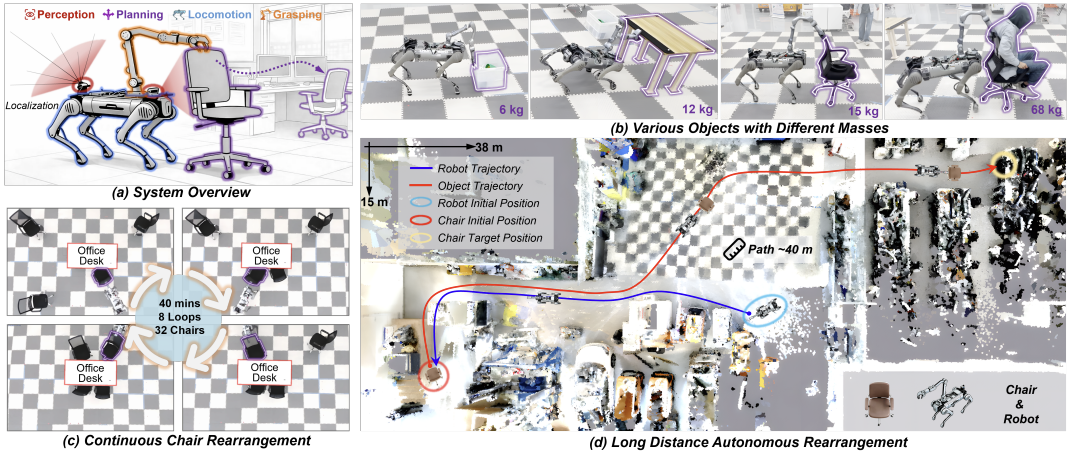 ALORE: Autonomous Large-Object Rearrangement with a Legged ManipulatorIEEE Transactions on Robotics (T-RO), 2026interactive navigation contact-rich manipulation loco-manipulation legged manipulator
 -
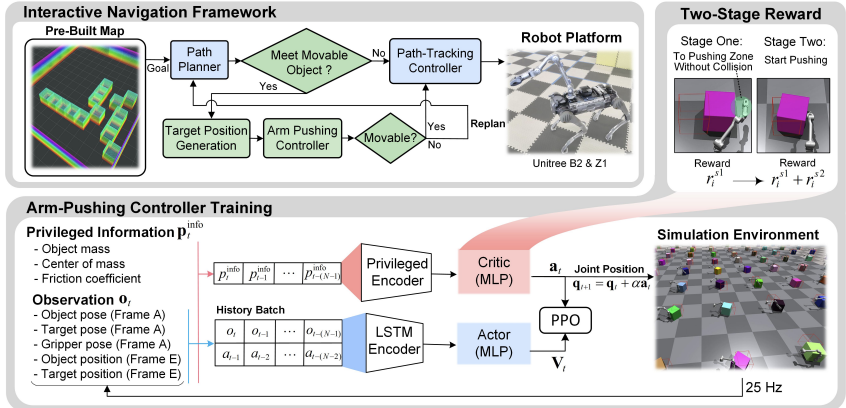 Interactive Navigation for Legged Manipulators with Learned Arm-Pushing ControllerIEEE/RSJ International Conference on Intelligent Robots and Systems (IROS), Best Paper Finalist, 2025interactive navigation contact-rich manipulation loco-manipulation legged manipulator
 -
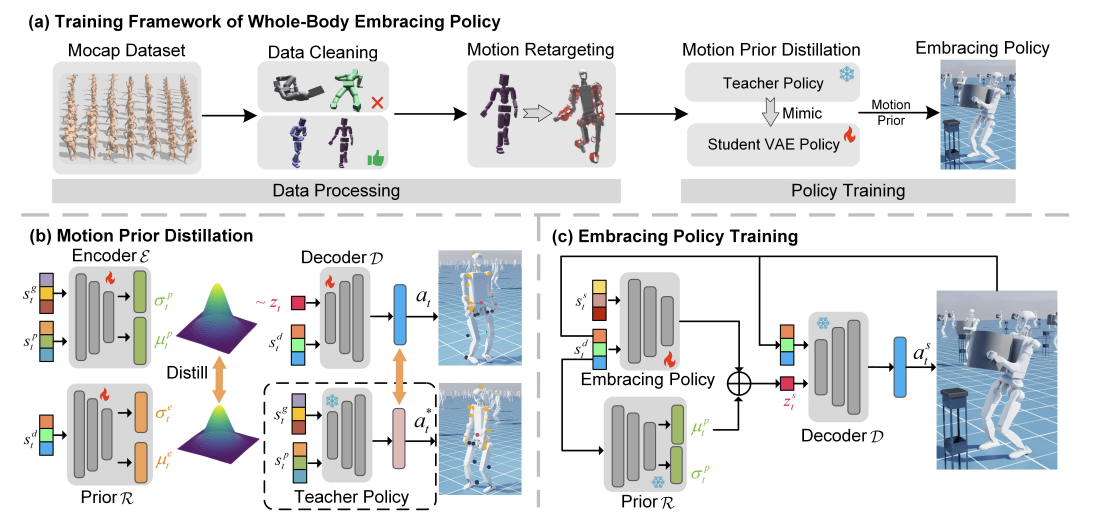 Embracing Bulky Objects with Humanoid Robots: Whole-Body Manipulation with Reinforcement LearningInternational Conference on Robotics & Automation (ICRA), 2026humanoid contact-rich manipulation loco-manipulation reinforcement learning
 -
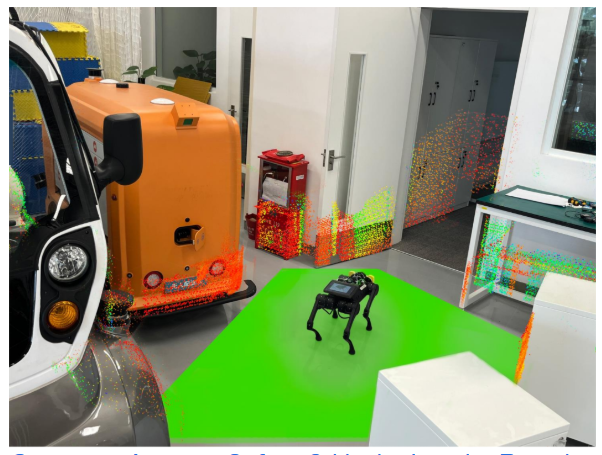 Geometry-Aware Safety-Critical Local Reactive Controller for Robot Navigation in Unknown and Cluttered EnvironmentsIEEE Robotics and Automation Letters (RA-L), 2024reactive control collision avoidance
 -
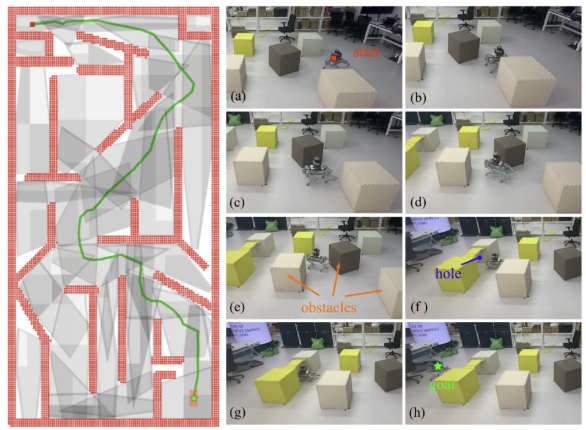 Collision-Free Trajectory Optimization in Cluttered Environments Using Sums-of-Squares ProgrammingIEEE Robotics and Automation Letters (RA-L), 2024collision avoidance trajectory optimization
 -
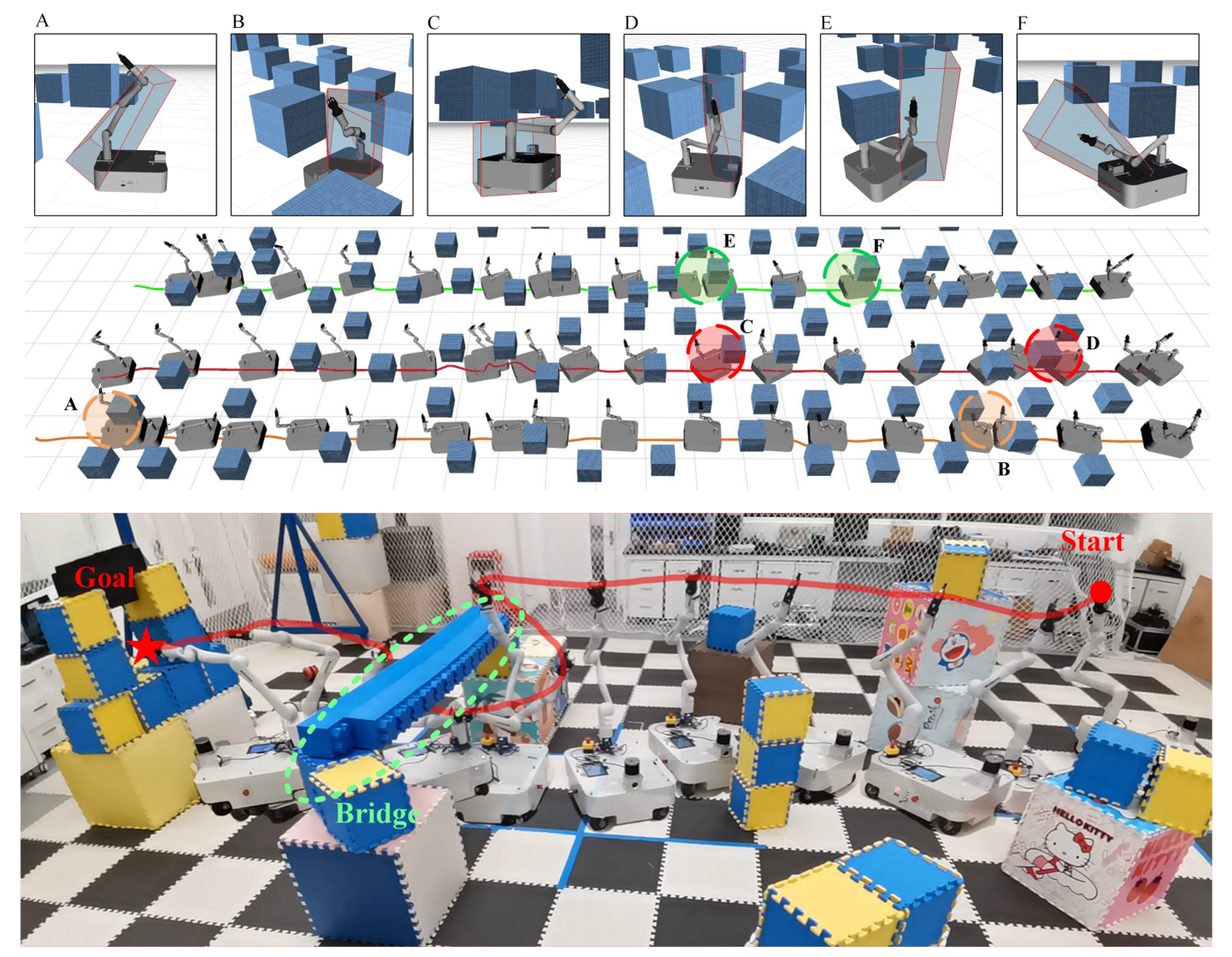 Local Reactive Control for Mobile Manipulators with Whole-Body Safety in Complex EnvironmentsIEEE Robotics and Automation Letters (RA-L), 2025mobile manipulator reactive control collision avoidance
 -
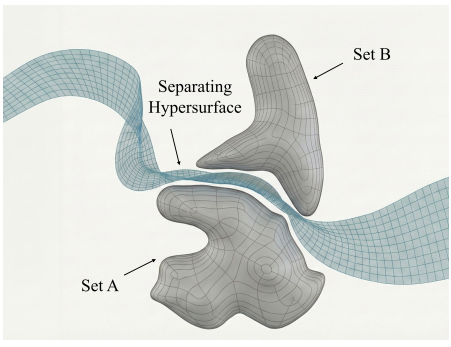 Online Trajectory Optimization for Arbitrary-Shaped Mobile Robots via Polynomial Separating HypersurfacesIEEE Robotics and Automation Letters (RA-L), 2026collision avoidance trajectory optimization
 -
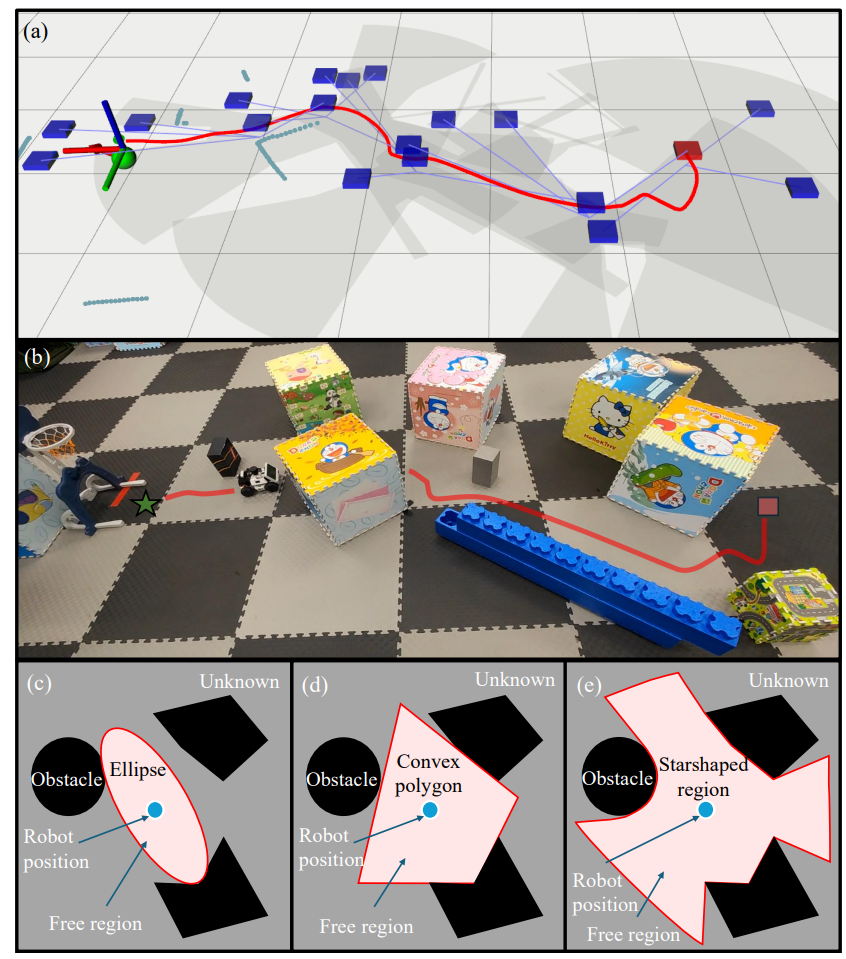 Robot Navigation in Unknown and Cluttered Workspace with Dynamical System Modulation in Starshaped RoadmapIEEE International Conference on Robotics and Automation (ICRA), 2025navigation collision avoidance dynamical system modulation
 -
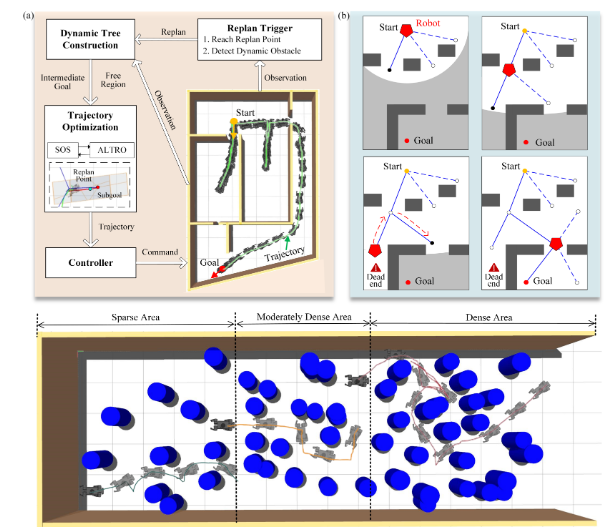 FRTree Planner: Robot Navigation in Cluttered and Unknown Environments with Tree of Free RegionsIEEE Robotics and Automation Letters (RA-L), 2025navigation collision avoidance
 -
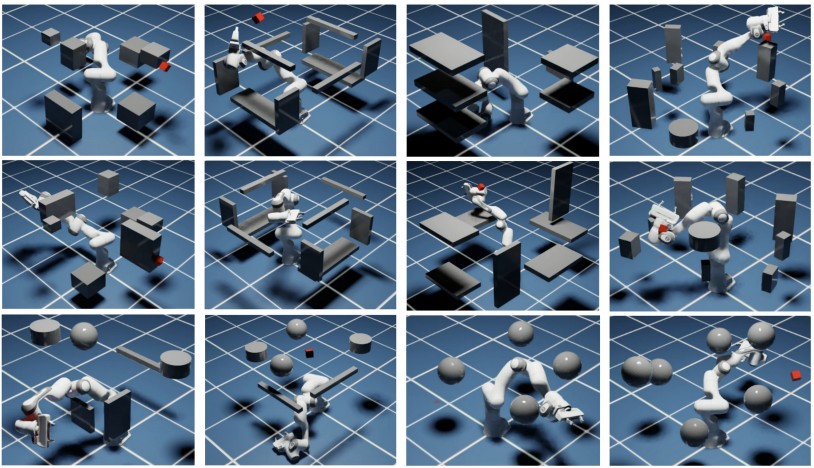 SAMP: Spatial Anchor-based Motion Policy for Collision-Aware Robotic ManipulatorsIEEE Transactions on Automation Science and Engineering (T-ASE), 2026manipulation collision avoidance
 -
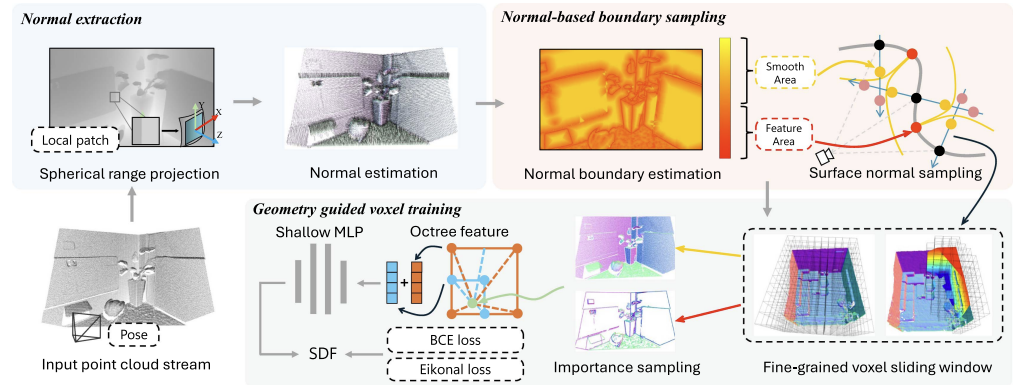 G2-SDF: Geometry-Guided Neural Signed Distance Fields for Scalable and Detailed ReconstructionIEEE Robotics and Automation Letters (RA-L), 2025neural distance field scene reconstruction


